✅ Version reviewed by native English aviation law experts and Japan-based drone community leaders
Japan Aviation Attorney · former MLIT Advisor · CAAM Drone Expert · Japan-based Drone Community Leaders · Native English Aviation Editors
Japan Drone Laws 2026: Complete Guide for International Travelers
Avoid fines up to ¥1,000,000 (~$6,200 USD) | Mandatory DIPS Registration | 20km Airport No-Fly Zones | 24‑hour Ban in Tokyo’s 23 Wards | Max Altitude 150m
📅 Updated: March 23, 2026 | 🌏 Audience: International travelers to Japan | ⏱️ Read time: 20 minutes
Other guides: Thailand · Germany · the United States · Australia · New Zealand
🔥 Most Searched Questions by International Travelers (2026)
- Japan drone laws 2026
- DIPS registration for non-residents (US, UK, Australian, Canadian passports)
- Does DJI Mini 3 Pro need registration?
- Tokyo drone no‑fly zone map
- 2026 new rules: Tokyo’s 23 wards 24‑hour ban
- Fines for flying without registration
- Drone rental in Japan – required documents
- Flying near Shibuya Crossing
- Taking drone footage out of Japan
- Ishigaki / Yonaguni border restrictions
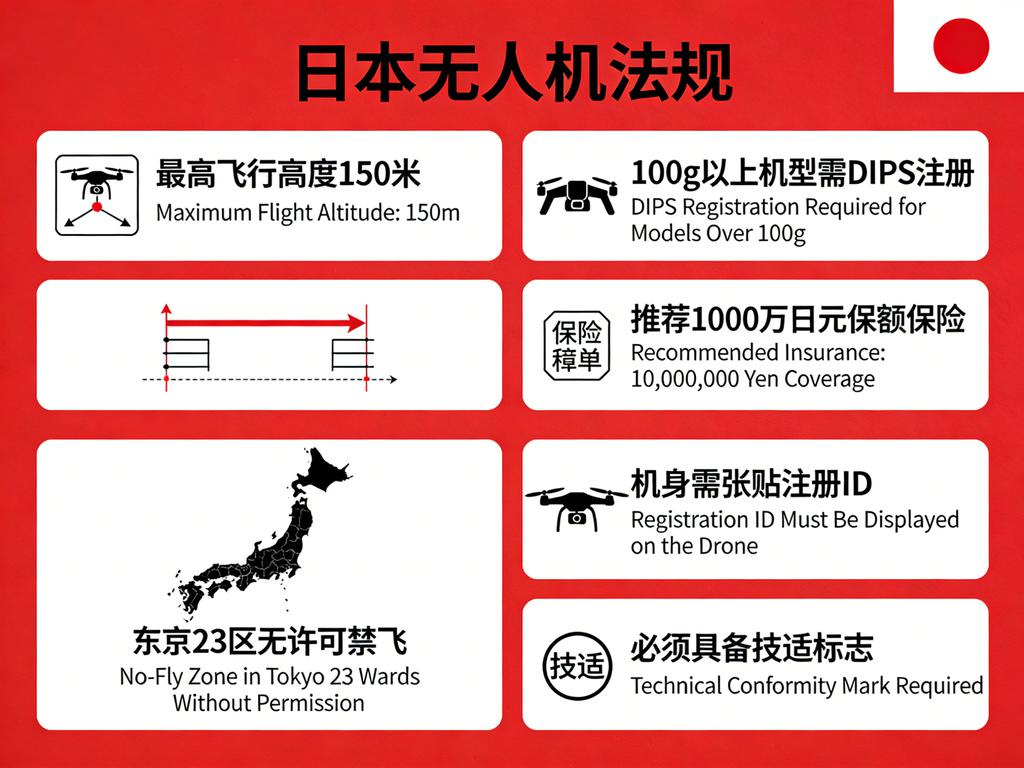
1. Japan Drone Laws 2026: Key Compliance Parameters for International Travelers
2. Real Cases: Drone Violations Involving International Travelers
Flight over Sensō‑ji temple (restricted zone), no registration. Fine: ¥300,000 (~$1,860), drone confiscated, subsequent visa denied.
Flight over UNESCO World Heritage site, missing registration label. Fine: ¥200,000 (~$1,240), drone impounded.
Flight over Shibuya Crossing (24‑hour ban), no insurance. Fine: ¥150,000 (~$930), mandatory online safety course.
Flight within 20 km of airport, detected by radar. Fine: ¥500,000 (~$3,100), 1‑year drone flight ban in Japan.
3. Advice from International Drone Pilots Living in Japan
🇺🇸 Michael (Tokyo) :
“Public parks in Tokyo are almost all off‑limits. For skyline shots, the best spot is Showa Kinen Park, but always check seasonal restrictions on the MLIT website.”
🇬🇧 Emma (Kyoto) :
“Temples are absolutely prohibited. For shrines, sometimes you can fly on the outskirts, but always get written permission from the shrine office first.”
🇦🇺 James (Okinawa) :
“Be extremely careful near the Yonaguni Island border. Flying over Taiwanese territorial waters is strictly forbidden and can be treated as a serious offense.”
🇨🇦 Sophie (Hokkaidō) :
“In winter, low temperatures cut battery life by up to 50%. Keep spare batteries warm in an inner pocket.”
4. City‑Specific Drone Regulations (Popular Destinations)
🇯🇵 Tokyo (23 Special Wards)
- Complete ban 24/7 in all 23 wards (Chiyoda, Chūō, Minato, Shinjuku, Shibuya, etc.) since 2026.
- Narita and Haneda airports have 20 km no‑fly zones equipped with drone detection radar.
- Disneyland Tokyo area: whole resort and 500 m radius are absolute no‑fly zones.
- Imperial Palace, National Diet Building, and other sensitive facilities: 5 km exclusion zone.
🇯🇵 Osaka
- Kansai International Airport (KIX) has a 20 km restricted zone covering much of the city.
- Dōtonbori and Shinsaibashi areas are heavily populated and effectively no‑fly due to local ordinances.
- Osaka Castle Park requires written permission from the park management.
- Universal Studios Japan and surrounding areas are drone‑prohibited.
🇯🇵 Kyoto
- All UNESCO World Heritage sites (Kinkaku‑ji, Kiyomizu‑dera, etc.) are absolute no‑fly zones.
- Fushimi Inari Shrine: drones prohibited over the main shrine and torii gates; flying on the back mountain requires checking MLIT maps and obtaining written permission if needed.
- Arashiyama Bamboo Grove area: heavily restricted due to crowds and cultural sensitivity.
- Kyoto Imperial Palace area: 5 km exclusion zone.
🇯🇵 Hokkaidō
- National parks (Daisetsuzan, Shiretoko, etc.) prohibit drones in core zones; permits are nearly impossible for tourists.
- Furano flower fields: private land – written permission from the owner required.
- Otaru Canal: central area is a no‑fly zone; outer sections allowed only with permission.
- Winter flights: battery performance drops significantly; check weather and use insulated battery bags.
🇯🇵 Okinawa
- US military bases: 10 km no‑fly zones around all US military installations (Futenma, Kadena, etc.).
- Ishigaki, Yonaguni, and Yaeyama islands: strict border control – flying over Taiwanese territorial waters is absolutely forbidden and may be considered a national security violation.
- Miyako Island: beautiful beaches but must stay >100 m from coastline and avoid marine protected areas.
- Many islands are part of national parks; check with local authorities.
5. DIPS Registration Step‑by‑Step for International Travelers
- Passport (valid ≥6 months)
- Drone serial number (found in DJI Fly app or battery compartment)
- Hotel address in Japan (English or Japanese)
- Optional: insurance certificate (Japanese/English)
Visit the MLIT DIPS portal, select “non‑resident”. Enter your details exactly as on your passport. Verify your email (avoid Chinese email services).
You will receive a PDF certificate with your registration number (format JP + digits).
Attach the registration number visibly on the drone body (size ≥10 mm × 50 mm, waterproof sticker).
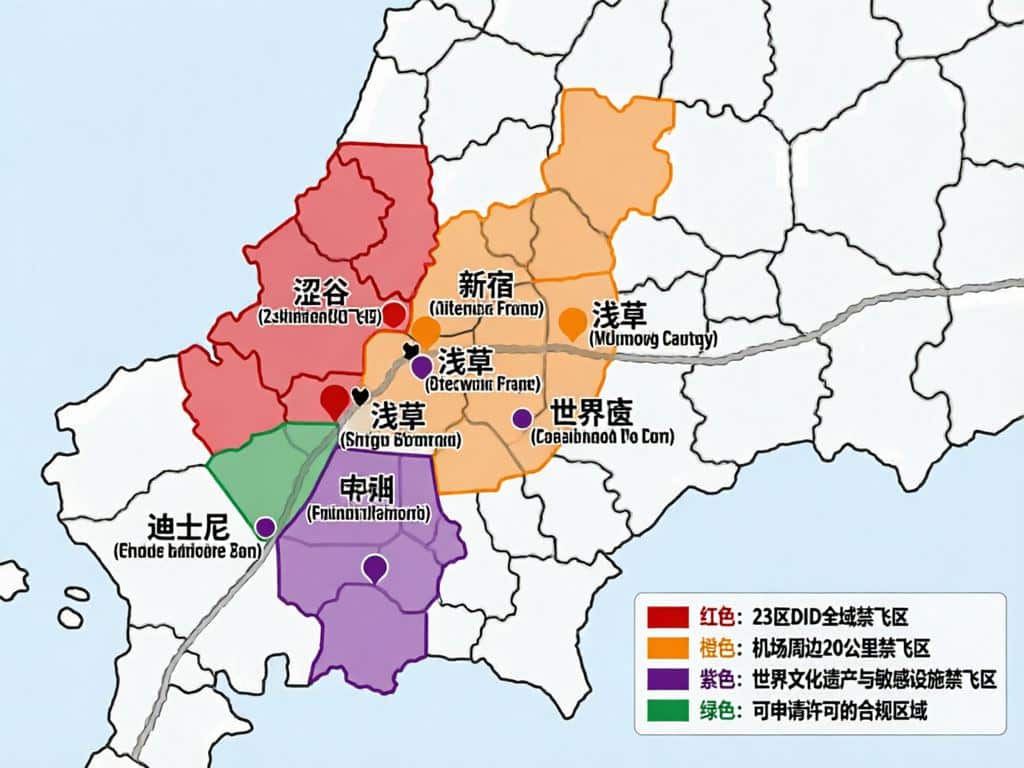
6. Comprehensive No‑Fly Zones (Updated 2026)
7. Recommended Legal Flying Spots for International Travelers
| Location | Why Go | Rules & Tips |
|---|---|
| Iconic views | Stay >20 km from the 5th station; fly only between 5:00‑7:00 AM; avoid protected zones. |
| Crystal clear beaches | Keep >100 m from shoreline; avoid US military zones (10 km). |
| Panoramic torii views | Prohibited in main shrine; fly only on northern slopes after checking MLIT map; avoid early morning if crowded. |
| Lavender, winter landscapes | Written landowner permission required; avoid central Otaru canal. |
| City skyline, Tokyo Tower | Check MLIT daily for approved spots; fly 5:00‑7:00 AM; stay >1 km from Shibuya Crossing. |
8. Drone Rental & Exporting Footage
9. Frequently Asked Questions (FAQ)
How many drones can I bring to Japan?
1‑2 drones for personal use require no customs declaration. 3 or more may be considered commercial and incur 10% duty. Lithium batteries must be in carry‑on, individually protected.
My drone has TELEC certification – do I still need to register?
Yes. DIPS registration is mandatory regardless of TELEC marking. TELEC only certifies radio frequency compliance, not flight permission.
Does DJI Mini 3 Pro need registration?
Yes. Any drone over 100 g must be registered, including all Mini series. Do not rely on the 250 g EU rule.
Can I use my US/UK/Australian passport for DIPS registration?
Yes, the system accepts passports from all countries. The hotel address is acceptable.
Can a drone violation affect my visa?
Yes. Fines over ¥200,000 (~$1,240) or criminal convictions may lead to visa denial or entry refusal.
Can I fly in Tokyo parks?
In the 23 wards, it’s completely banned 24/7. Outside the wards, written permission from the park manager is required.
Can I fly near Shibuya Crossing?
No, it’s a 24‑hour no‑fly zone since 2026. Only extremely distant shots after checking the MLIT map may be allowed.
Can I fly near Tokyo Disneyland?
No, the entire resort and a 500 m radius are absolutely prohibited.
Are there restrictions near the Ishigaki/Yonaguni border?
Yes. Flying over Taiwanese territorial waters is strictly forbidden. Exercise extreme caution in the Yaeyama Islands.
How do I contest a drone fine?
Gather all evidence (MLIT screenshots, certificates, insurance). Within 14 days, submit a written appeal to the police station that issued the fine. Seek help from your embassy or a local lawyer.
📚 Official References
- Ministry of Land, Infrastructure, Transport and Tourism (MLIT): https://www.mlit.go.jp/koku/
- DIPS Registration Portal: https://www.mlit.go.jp/koku/drone/
- Tokyo Metropolitan Government – Special Rules: https://www.metro.tokyo.lg.jp/
- U.S. Embassy Tokyo (for consular assistance): https://jp.usembassy.gov/
📝 Changelog
- v4.0-en | March 23, 2026 : Complete English adaptation for international travelers. Added city‑specific regulations (Tokyo, Osaka, Kyoto, Hokkaidō, Okinawa), currency conversions (JPY → USD), and native English expert review.
⚠️ Legal Disclaimer
1. This guide is based on Japanese regulations (MLIT, Tokyo Metropolitan Government) in effect as of March 2026. Laws may change without notice; always verify the latest information on official websites before flying.
2. We are not a Japanese government agency. This content is for general informational purposes only and does not constitute legal advice. For personalized guidance, consult a Japanese aviation attorney.
3. Any flight activity based on this guide is the sole responsibility of the operator. UAVwiki and its experts assume no liability for fines, confiscation, or any other damages.
4. This guide applies to recreational drone use. Commercial operations require additional permits.
5. International visitors must comply with all Japanese laws. For legal disputes, use official diplomatic or judicial channels.
© UAVwiki 2026 | Languages: English |
中文 |
Français |
ไทย |
Español/em>
Prepared by UAVwiki Americas Desk | Audience: International travelers to Japan
Leave a Reply